How Fostering Dogs Saves Lives in Texas (And How You Can Help)
One tiny foster puppy changed my perspective forever—and showed me how opening your home for just a few weeks can enrich the lives of all involved.
If you’ve ever wondered what it takes to foster a dog—or whether fostering is right for you—National Foster Month is the perfect time to learn.
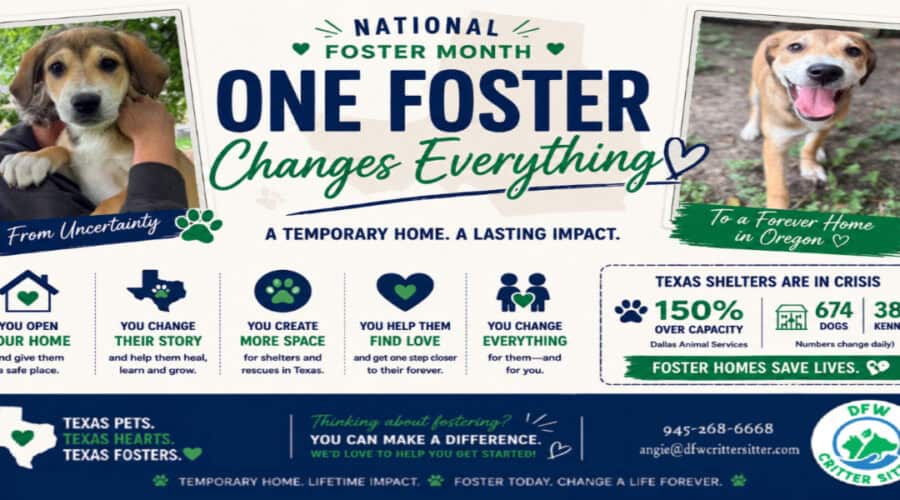
Across Texas, animal shelters and foster-based rescues are facing an unprecedented overcrowding crisis. Here in North Texas, Dallas Animal Services has recently operated at approximately 150% capacity, and rescue organizations are urgently searching for foster homes simply to continue saving lives.
Before this year, I understood animal rescue from the outside. I saw the heartbreaking social media posts, the urgent pleas for foster homes, and the photos of overcrowded shelters. But I didn’t truly understand what fostering meant until one rescue post stopped me in my tracks.
Ruff Road Revival was looking for someone willing to foster one puppy for just two weeks.
I remember thinking, I can do two weeks.
I had no idea those two weeks would completely change my perspective.
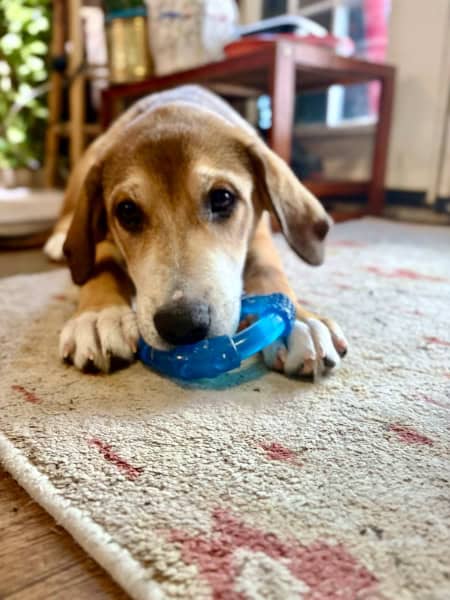
Her rescue name was Orzo. We called her Sunny.
What started as a temporary foster became one of the most rewarding experiences I’ve ever had. Along the way, I learned what foster families really do, why Texas rescues depend on them, and how one temporary home can completely change an animal’s future.
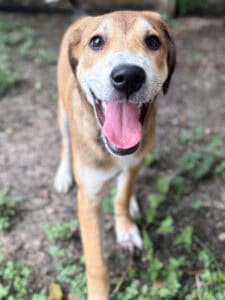
Sunny eventually made the journey from a neglected property in Texas to a loving forever home in Oregon.
Her story is proof that fostering isn’t simply about giving a dog somewhere to stay. It’s about giving them the opportunity to heal, learn, trust, and ultimately find the family they were always meant for.
The Texas Animal Rescue Crisis
Texas continues to face one of the largest companion animal overpopulation crises in the country. Shelters and rescues are struggling under the weight of increased owner surrenders, rising veterinary costs, housing instability, backyard breeding, and a severe shortage of foster homes.
As one of the nation’s largest open-intake municipal shelters, Dallas Animal Services, cannot simply stop accepting animals when space runs out. Recently, the shelter reported housing approximately 674 dogs despite having only 388 kennels available, operating at roughly 150% capacity.
When shelters become overcrowded, disease spreads more easily, stress increases, medical care becomes more difficult, and rescue organizations become overwhelmed trying to move animals into foster homes.
Every foster home creates space for another animal.
Every adoption opens another lifesaving opportunity.
For many rescue organizations, foster families aren’t simply extra help—they’re the reason rescue is possible at all.
What People Misconstrue About Fostering
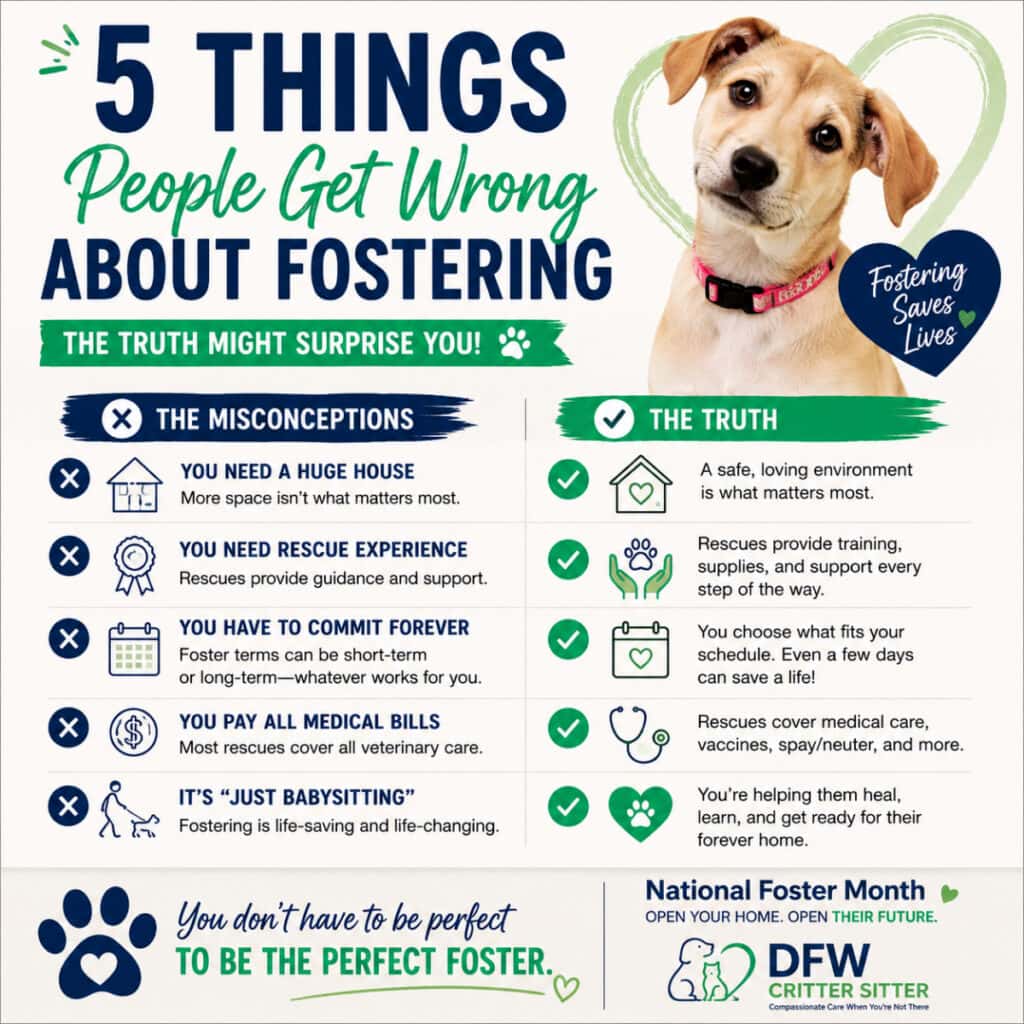
One of the biggest misconceptions about fostering is that you need a huge house, years of experience, or the ability to commit long-term.
The truth is that rescues need all kinds of foster homes.
- Weekend fosters
- Emergency fosters
- Medical recovery fosters
- Vacation fosters
- Bottle-baby fosters
- Large dog fosters
- Anyone willing to provide a safe place for a dog to decompress
Even opening your home for just a few days can save a life.
Animal rescue doesn’t need perfect people. It simply needs more people willing to help.
Does Fostering Cost Money?
One of the biggest surprises for me was learning that fostering isn’t nearly as expensive as many people assume.
Throughout Sunny’s stay, Ruff Road Revival provided veterinary care, vaccinations, medications, and ongoing support. They also supplied many of the essentials needed during her foster stay.
My role was providing a safe home, transportation to appointments, patience, consistency, and lots of love.
Every rescue is different, but many foster-based organizations work hard to remove financial barriers so more people are able to foster.

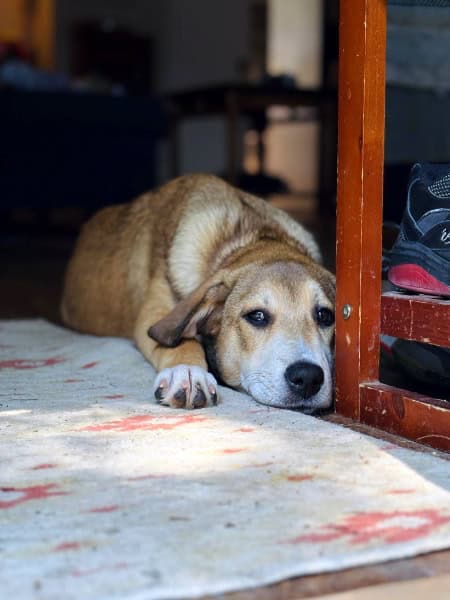
Meet Sunny
Sunny’s story began weeks before she ever came to us.
She was rescued from an owner who had become overwhelmed after an accidental litter of sixteen puppies—a heartbreaking reminder of why spaying and neutering pets is so important. When she arrived, she was covered in hundreds of fleas, and it was clear she’d had very little exposure to people or the outside world. Her lack of human interaction and previous living conditions had left her fearful of almost everything… except other dogs. Even the grass was scary. She had to be carried everywhere.
But after just a few days in our puppy-loving home, her charm and zest for life began to shine through. That little spark grew brighter every single day, eventually earning her the nickname Sunny.
Our original plan was to foster her for just two weeks until her long-term foster was ready to take over. But after investing so much time and love into her, we realized we didn’t want her bouncing between foster homes before finding her forever family. So we decided to see it through ourselves.
It was one of the best decisions we’ve ever made.
Watching Sunny transform from a shy, fearful puppy into a confident, effervescent companion was one of the most rewarding experiences I’ve ever had—and that’s saying a lot, given my profession.
Our role wasn’t simply keeping her safe. It was preparing her for the next chapter of her life.
As her foster family, our responsibilities included:
● Crate training
● Potty training
● Teaching household routines
● Building confidence
● Introducing new people, places, and experiences
● Veterinary appointments
● Spay surgery and recovery
● Interstate travel preparation
● And, perhaps most importantly, teaching her how to simply be a puppy.
Along the way, we discovered she adored bones and chewy treats. She also had one of the longest tails I’ve ever seen—and when she wagged it, her entire body wagged right along with it. Sometimes she’d get so excited she’d accidentally smack herself in the head with her own tail.
It never stopped making us laugh.
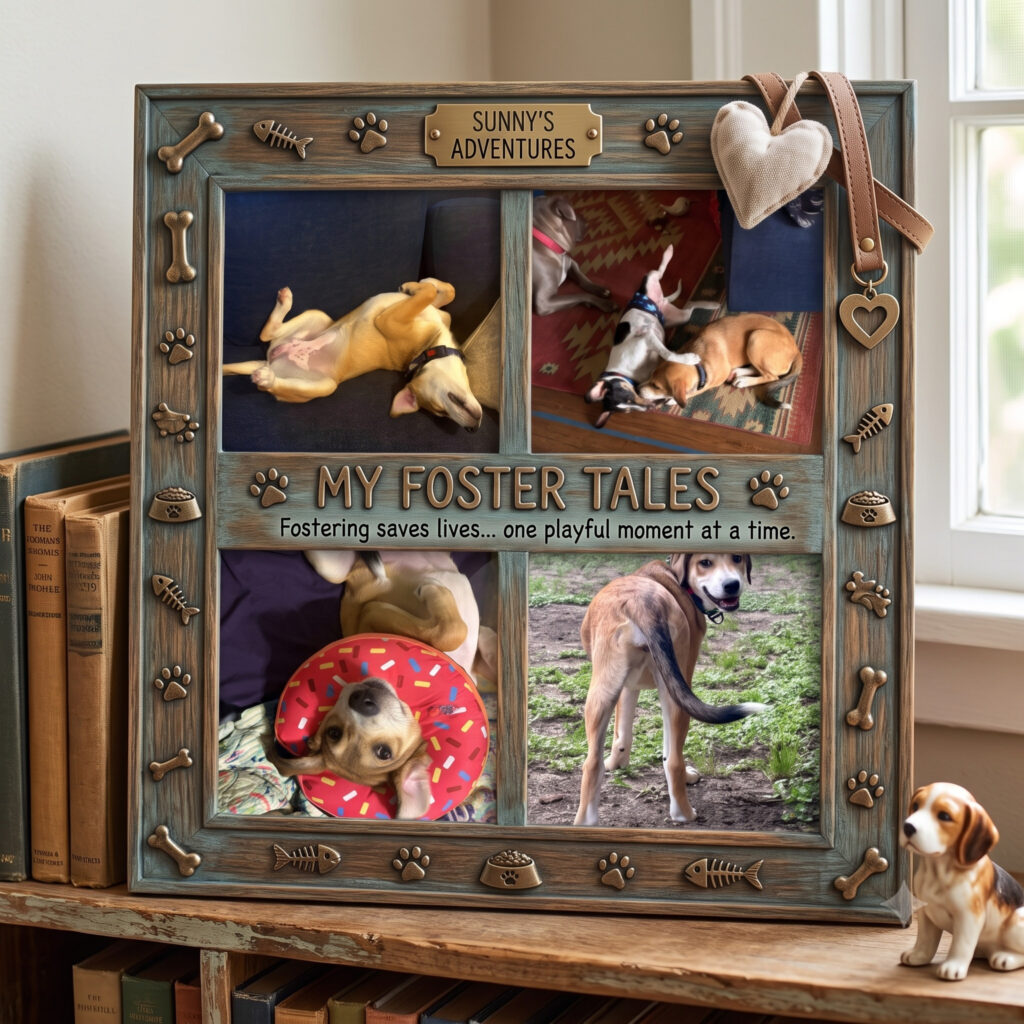
Helping Sunny Find Her FOREVER Family
Part of fostering is getting to know an animal well enough to help match them with the right family.
When someone in Oregon became interested in Sunny, we began texting regularly. I shared countless photos and videos, answered questions honestly, and even scheduled a FaceTime call so they could see her personality for themselves. Those conversations helped them fall in love with the same dog we had come to love.
Before long, the adoption was official and her transport was arranged. Roughly two months after arriving at our home, Sunny was on her way to Oregon to meet her new family.
I knew saying goodbye would be hard. And it was.
But underneath the sadness was warm overwhelming gratitude – because goodbye meant she finally had a family waiting for her that would give her the loving home she deserved. What they couldn’t yet know, but would soon discover, was how much Sunny would enrich their lives.
That is the bittersweet reality of fostering.
Like every loving parent, you fall in love knowing your job is eventually letting go to let live. You hold on to the satisfaction that you did your best and gave them the foundation for a happy life.
But you keep the memories forever.
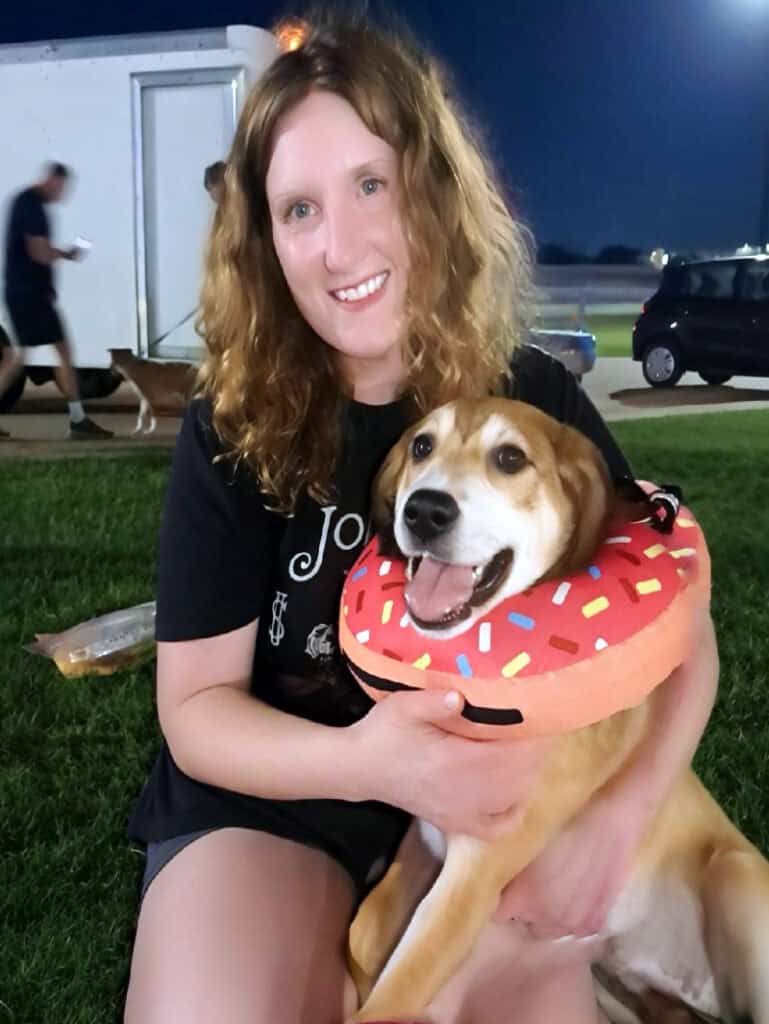
Then came the message every foster parent hopes to receive.
Sunny had arrived safely.
Seeing photos of her exploring her new home, meeting her new canine sibling, Tootles, and curling up beside the little boy who quickly became “her boy” made every tear worthwhile.
Those weren’t just updates. They were proof that temporary love can create a lifetime of happiness.
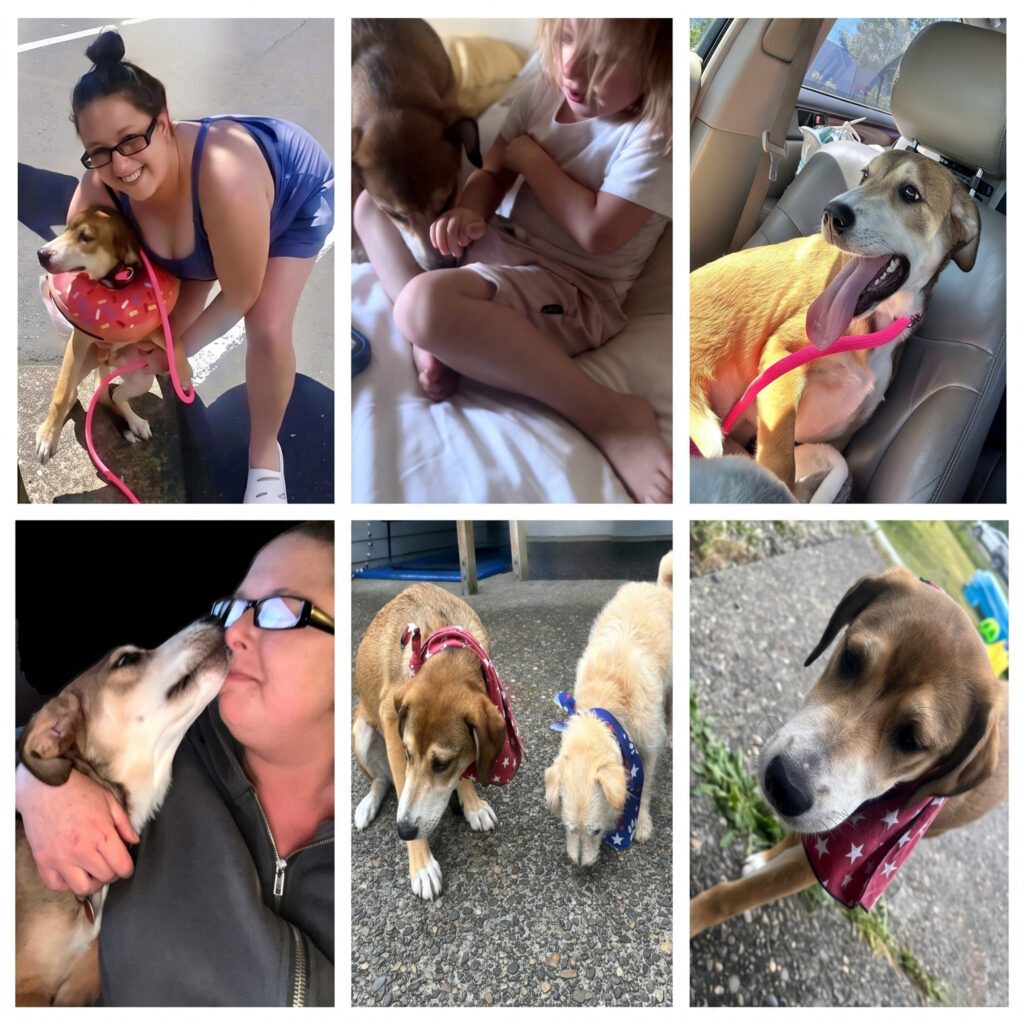
Working with Ruff Road Revival
Working with Ruff Road Revival made fostering approachable, especially as a first-time foster.
After seeing their urgent foster request online, I completed a foster application, participated in a virtual home visit, and coordinated Sunny’s pickup.
From day one, they communicated clearly, provided supplies, explained expectations, and remained available whenever questions came up.
Behind every successful adoption are countless volunteers coordinating veterinary care, transport, applications, supplies, social media, and foster support.
Working with Ruff Road Revival gave me an even greater appreciation for everything happening behind the scenes—and for the incredible people dedicating their time to saving lives every single day.
What to Expect as a First-Time Foster
Most foster journeys follow a similar path:
- Submit a foster application.
- Complete a home check.
- Meet your foster dog.
- Receive supplies and support.
- Help prepare your foster for adoption.
- Celebrate when they find their forever home.
You are never expected to do it alone.
Why Foster Homes Matter More Than Ever
Every open foster home creates space for another animal.
Without foster homes:
- Rescue groups cannot pull dogs from shelters.
- Medical cases have nowhere to recover.
- Puppies remain at greater risk of illness.
- Shelter overcrowding continues to worsen.
Foster homes are the bridge between homelessness and a forever family.
Animal rescue isn’t powered by buildings. It’s powered by people.
Not Ready to Foster?
You can still make a meaningful difference.
- Share adoption posts.
- Donate supplies.
- Sponsor veterinary care.
- Volunteer at adoption events.
- Help transport animals.
- Advocate for spaying and neutering.
There is no small contribution in rescue.
Every act of kindness helps save lives.
Ready to Foster? Here are Some Great DFW & Texas Rescues to Start With
If Sunny’s story has inspired you to consider fostering, there are many incredible rescue organizations throughout the Dallas-Fort Worth area that rely heavily on foster homes to save lives.
The reality is simple: rescues can only save as many animals as they have foster homes available.
If you’ve ever considered fostering, now is the perfect time to learn more.
Ruff Road Revival
The rescue that introduced me to fostering through Sunny’s journey. Ruff Road Revival is a foster-based rescue dedicated to saving vulnerable animals throughout Texas.
Website:
https://www.ruffroadrevival.com
Foster Application:
https://www.ruffroadrevival.com/foster
Cody’s Friends Rescue
One of the largest foster-based rescues in North Texas, with hundreds of dogs living in foster homes while waiting for adoption.
Love & Paws Rescue
A Fort Worth-based foster rescue focused on saving some of Texas’ most at-risk dogs through dedicated foster homes.
Salvaged Souls Pet Rescue
A Dallas-Fort Worth foster-based rescue that works extensively with shelter dogs and relies on foster homes throughout the metroplex.
Website:
https://salvagedsoulspetrescue.org
Foster Information:
https://salvagedsoulspetrescue.org/foster
Operation Kindness
One of the most established animal welfare organizations in North Texas, working extensively with shelter animals, adoption programs, and foster placements.
Texas Husky Rescue
A dedicated breed-specific rescue focused on Huskies and Husky mixes throughout Texas. This organization relies heavily on foster homes and transport partnerships to move dogs out of overcrowded shelters and into safe environments where they can decompress, receive medical care, and prepare for adoption.
Many of their dogs come directly from high-intake Texas shelters and are placed into foster homes before being adopted locally or transported to other states where demand for Huskies is higher.
Website:
https://www.texashuskyrescue.org
Foster Application:
https://www.texashuskyrescue.org/foster
Three Little Pitties Rescue
One of the most successful transport-based rescues in Texas, Three Little Pitties rescues dogs from overcrowded Texas shelters and places them in foster homes while matching them with adopters throughout the United States.
Their transport program regularly places dogs in states such as Oregon, Washington, Wisconsin, Illinois, Pennsylvania, New York, and many others.
The Website:
https://www.threelittlepittiesrescue.org
Foster Information:
https://www.threelittlepittiesrescue.org/pages/foster
The Big Picture 🐾
No matter which rescue you choose, fostering does not require perfection, a huge home, or years of experience.
Sometimes all it takes to save a life is opening your door for a few weeks.
Sunny’s story is proof of that.
DFW Critter Sitter
Real care. Real life. Real solutions
📍 dfwcrittersitter.com
📞 945-268-6668

Dog Fulfillment: Why a “Tired Dog” Isn’t Always a Happy One
Dog Fulfillment: Why a “Tired Dog” Isn’t Always a Happy One
At DFW Critter Sitter, one of the most common things we hear from loving, well-intentioned dog parents is:
“We walk, we play, we try to wear them out… and nothing changes.”
Somewhere along the way, many of us were taught that a tired dog is a good dog.
But in reality, a tired dog is simply tired — and just like people, dogs who are exhausted without feeling fulfilled can become cranky, overstimulated, anxious, or unsettled.
A fulfilled dog, on the other hand, feels balanced. They can engage, decompress, and truly rest.
Fulfillment isn’t about doing more — it’s about meeting the right needs, in the right way.
The Five Pillars of a Fulfilled Dog
A truly content dog has five core needs met on a regular basis.
When even one pillar is missing, frustration builds — and that frustration often shows up as the behaviors we struggle with most.
1️⃣ Physical Exercise: Movement That Supports Regulation
Dogs need physical movement — but not endless intensity.
Exercise provides an outlet for excess energy, supports emotional regulation, and helps dogs feel grounded in their bodies. Many dogs, especially those with working or sporting backgrounds, are biologically designed to move. When movement is missing, energy builds and spills out as restlessness or impulsive behavior.
That said, more exercise isn’t always better. Constantly pushing distance, speed, or intensity can lead to overstimulation — or accidentally create endurance athletes who struggle to settle.
The goal is enough movement to take the edge off, not push dogs past their limits.
A well-exercised dog should be able to think clearly, engage calmly, and transition into rest.
2️⃣ Mental Stimulation: A Brain That Feels Useful
Mental fulfillment is often the missing piece — especially for intelligent or high-drive dogs.
Dogs are natural problem solvers. Their brains are constantly scanning for patterns, opportunities, and outcomes. Without appropriate mental outlets, that energy turns inward or spills out as destructive or anxious behavior.
Mental stimulation can include:
- Problem-solving activities
- Scent work and foraging
- Learning new skills or cues
- Body awareness and intentional movement
- Making choices instead of reacting on impulse
Using the brain doesn’t exhaust dogs — it satisfies them. Many dogs relax more deeply after mental enrichment than after physical exercise alone.


3️⃣ Connection: Feeling Seen, Safe, and Understood
Dogs are social beings. They don’t just need activity — they need meaningful connection.
Connection happens when time is intentional, present, and responsive. Walks, training, grooming, play, and even quiet moments build trust when we’re truly tuned in.
Affection plays a role too — but it looks different for every dog. Some crave cuddles, some prefer quiet companionship, and others need space. Learning how your dog prefers to connect — and honoring that — can dramatically reduce stress and anxiety.
Often, a few minutes of calm, undistracted togetherness does more for a dog’s nervous system than an hour of chaotic activity.
4️⃣ Play: Joy, Expression, and Emotional Release
Play isn’t optional — it’s essential.
Through play, dogs release stress, build confidence, practice communication, and experience joy. Healthy play allows dogs to express instincts in appropriate ways and strengthens the human-animal bond.
Play should match the individual dog — not just their breed label. Some love chase, others tug, some wrestle, some retrieve, and many simply enjoy goofy zoomies.
Equally important is how play ends. Helping dogs wind down — slowing movements, lowering intensity, and finishing on calm — teaches emotional regulation and prevents overstimulation. Dogs who learn to transition from excitement to calm carry that skill into everyday life.
5️⃣ Calm & Rest: The Skill That Makes Everything Stick
Calm is not automatic — it’s learned.
Many dogs struggle not because they’re under-exercised, but because they’ve never been taught how to rest. Dogs need significant downtime to reset their nervous systems:
- Adult dogs: 12–14 hours of rest per day
- Puppies: up to 18–19 hours
True rest requires low stimulation, limited movement, and a sense of safety. Without it, dogs pace, hover, chew, bark, or seek constant engagement instead of settling.
Practicing calm — through quiet spaces, structured rest, place work, or gentle confinement — gives dogs permission to disengage and recharge.
Fulfillment isn’t complete until dogs can truly relax.
At DFW Critter Sitter, we support healthy routines and provide dependable care when families need an extra set of trusted hands.
Call / Text 945-268-6668
Biological & Breed-Specific Fulfillment: Honoring Instincts
Every dog has instincts shaped by genetics and history. When those instincts don’t have healthy outlets, dogs create their own — and those outlets often look like “problem behavior.”
- Herding dogs may chase or nip children or other animals
- Scent hounds may relentlessly track and steal food
- Retrievers may steal and carry items
- Bull-type breeds may mouth or wrestle excessively
These behaviors aren’t flaws — they’re unmet biological needs.
When dogs are allowed to engage in safe, appropriate versions of what their bodies and brains were designed to do, stress decreases and behavior improves naturally.
Fulfillment becomes preventative care.

Signs Your Dog May Be Unfulfilled
Sometimes dogs aren’t being difficult — they’re communicating.
☐ Restless even after long walks or vigorous play
☐ Excessive barking, whining, or pacing
☐ Destructive behaviors (chewing, digging, shredding)
☐ Jumping, mouthing, or difficulty settling
☐ Over-excitement during greetings or transitions
☐ Anxiety when left alone — or inability to relax when you’re home
☐ Constant attention-seeking or “velcro” behavior
☐ Reactivity that worsens over time
If several of these feel familiar, it may be time to adjust how your dog’s needs are being met — not just how often.
How DFW Critter Sitter Supports Whole-Dog Fulfillment
🐾 Drop-In & Enrichment Visits
Best for dogs who need routine, companionship, mental stimulation, and emotional regulation
Our Drop-In & Enrichment Visits are thoughtful and unrushed, combining comfort, connection, and purposeful engagement.
These visits may include:
- Decompression and nervous-system regulation
- Gentle enrichment, scent work, or foraging
- Biological outlets matched to the individual dog
- Meaningful connection and calm transitions
Ideal for dogs who spend part of the day alone, dogs who don’t benefit from “more exercise” alone, and dogs who need support settling and feeling balanced in their own space.
🐾 Purposeful Walks
Best for dogs with pent-up physical or environmental energy
These aren’t distance-based walks.
Our purposeful walks prioritize:
- Sniffing and exploration
- Engagement and biological fulfillment
- Regulated movement and nervous-system balance
We meet dogs where they are — allowing them to move, process, and settle naturally instead of rushing them through a route.
🐾 Home-Style Boarding
Best for dogs who thrive in calm, structured, home-like environments
Our small-scale boarding balances:
- Intentional activity and enrichment
- Rest and decompression
- Predictable routines
Dogs are supported in practicing calm, settling, and appropriate social skills — without the chaos or overwhelm of large facilities.
🐾 Day Play
Best for dogs who enjoy social interaction in small, thoughtful groups
Day Play at DFW Critter Sitter is:
- Enrichment-focused, not a free-for-all
- Intentionally structured for social balance
- Designed to support regulation — not hype
We help dogs practice social skills, emotional regulation, and the ability to settle, so they go home fulfilled — not fried.
Fulfillment Changes Everything
When dogs receive balanced fulfillment:
- Anxiety softens
- Destructive behaviors fade
- Reactivity improves
- Confidence grows
- Rest becomes easier
Fulfillment isn’t about doing more.
It’s about finally doing what actually works.
That philosophy is at the heart of everything we do at DFW Critter Sitter — because fulfilled dogs are calmer dogs, and calmer dogs are happier dogs. 🐾💚
A Personal Note From Me and My Husky

Living with an active, high-drive, incredibly intelligent husky taught me this lesson firsthand.
At first, I did what most people do — longer walks, dog park visits, and pouring more and more effort into trying to “wear her out.” Honestly? It barely helped. If anything, it just built stamina. She had no off switch, and the destructive behaviors were still there.
It wasn’t until I started researching and intentionally adding mental challenges and play that satisfied her natural drives that I saw a real change.
Some of our favorite activities include basic obedience and occasional tricks, taking breaks on walks to sit and observe the world, flirt pole, lots of tug, and her favorite — hide and seek. Most nights also end with grooming and somatic exercises. I plan to start incorporating more scent work and potentially Fast CAT or pulling-based activities soon.
— Angie & Marlo
Fulfillment creates calmer dogs.
Calmer dogs create happier homes.
📍 dfwcrittersitter.com
📞 945-268-6668
🐾 Book care that meets the whole dog



Somatic Exercises: Helping Your Pets Release Stress, Tension & Anxiety — Especially During the Holidays
Somatic exercises are gentle, mindful techniques that help pets release physical and emotional tension — especially helpful for dogs and cats during the chaotic holiday season. Learn how to support your pet with grounding touch, body mapping, and calming practices.

How to Prepare Your Pet for Boarding – A Stress-Free Guide from DFW Critter Sitter
Boarding doesn’t have to be stressful — especially when your pet is set up for success. This guide walks you through DFW Critter Sitter’s gentle, low-volume boarding approach, trial days, slow introductions, and familiar comfort items. Discover how to help your dog feel relaxed, confident, and right at home during their stay.

Celebrating Senior Pet Month: How to Support Your Aging Best Friend at Home & Through Proper Grooming
Celebrate Senior Pet Month with essential home setup tips, grooming guidance, and comfort-focused care strategies to support aging dogs and cats. Learn how DFW Critter Sitter helps senior pets stay healthy, safe, and happy in North Texas.