Hot Pavement, Hot Cars, and Hidden Dangers: Your DFW Summer Pet Safety Guide
If you live in North Texas, you already know what Memorial Day weekend usually means:
Summer has arrived — and in DFW, it doesn’t ease in gently.
At DFW Critter Sitter, we start seeing heat-related issues every year around this time: pets coming back overheated from midday walks or outdoor time, animals refusing water until they’re already dehydrated, owners shocked by how quickly the heat escalated.
And honestly? That’s the tricky part about Texas summers.
The danger usually isn’t just the temperature itself.
It’s how quickly everyday situations can become dangerous before people realize it.
Why DFW Summers Are Different 🌡️
North Texas summers are intense, persistent, and often unpredictable.
Dallas-Fort Worth averages roughly 16–20 days above 100°F each year depending on the climate period measured — and in especially severe summers, those numbers climb much higher.
Add in humidity, blazing pavement, warm overnight temperatures, and long stretches of stagnant air, and pets can overheat far faster than many owners expect.
For pet professionals, this isn’t just weather trivia.
It changes how we schedule walks, monitor hydration, transport pets, and structure outdoor time every single day during summer.
The Pavement Problem 🐾
This is one of the biggest summer dangers we see catch people off guard.
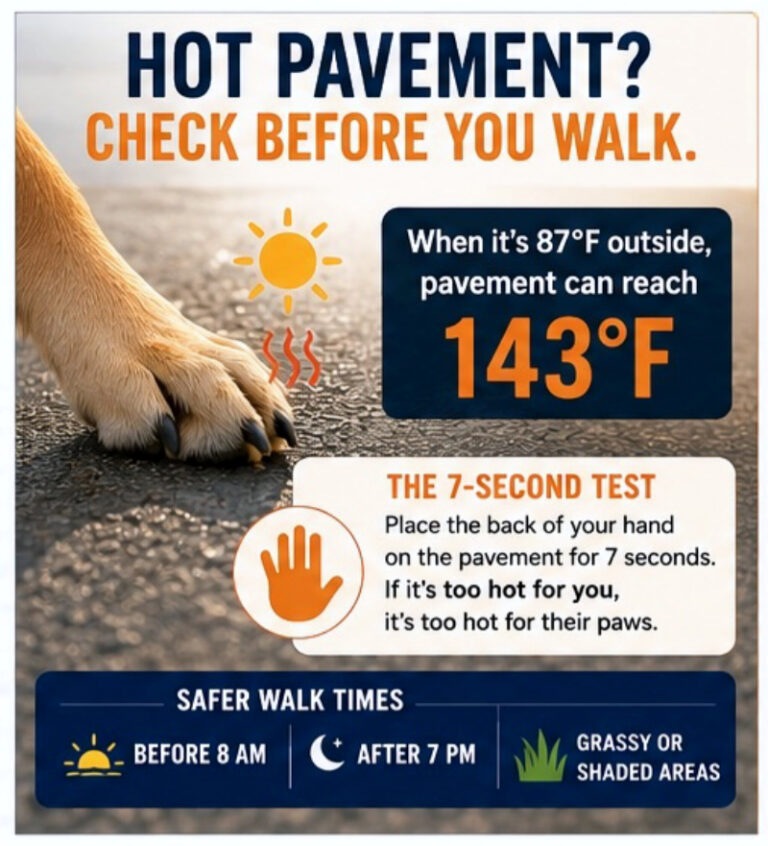
When the air temperature reaches the upper 80s, asphalt and concrete surfaces can become dangerously hot in direct sun — often 40–60 degrees hotter than the air itself.
That means pavement can easily exceed 130–140°F on an average DFW summer afternoon.
Hot enough to burn paw pads surprisingly fast.
The 7-Second Test
Place the back of your hand flat on the pavement for 7 seconds.
If it’s uncomfortable for you, it’s too hot for your dog’s paws.
Safer Walk Times
• Early morning — before 8 AM is ideal
• Evening — after 7 PM once pavement has cooled down
• Prioritize grassy or shaded areas whenever possible
• If midday walks are unavoidable, use paw balm or protective booties
Hot Cars: The “Just 5 Minutes” Myth 🚗
We have heard this before …:
“I was only running in for a second.”
But in a Texas summer, temperatures inside a parked car rise dangerously fast.
What Happens Inside a Hot Car
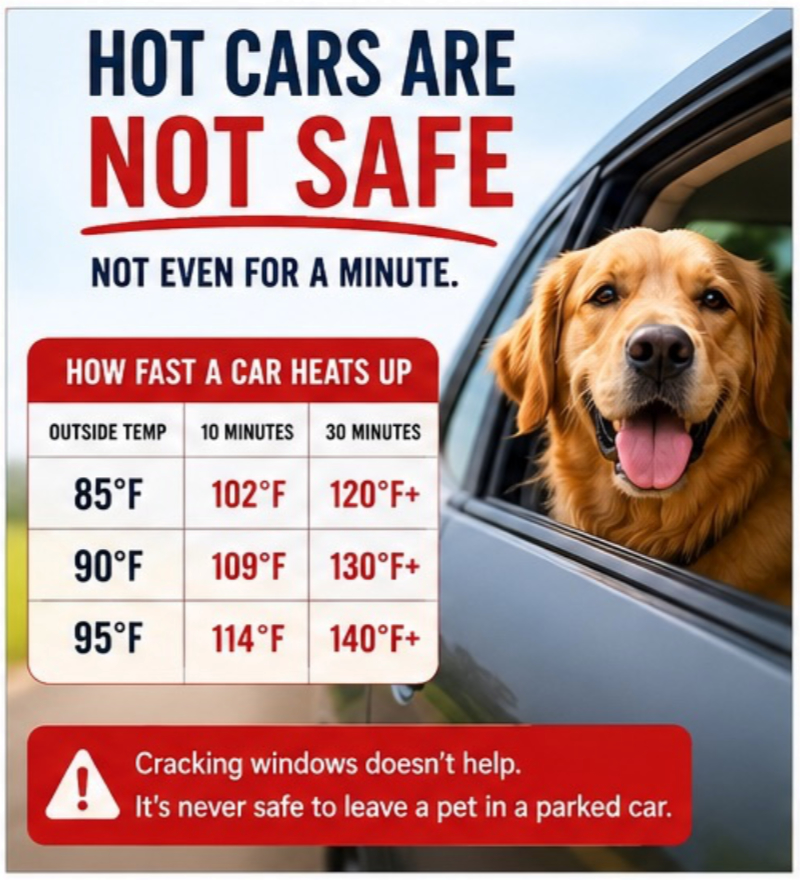
• At 85°F outside, a car interior can reach over 100°F within 10 minutes
• At 90°F outside, interior temperatures can climb past 109°F very quickly
• Within 30 minutes, temperatures can become life-threatening for pets
• Cracking windows provides very little protection and does not meaningfully cool the vehicle
Dogs and cats cannot regulate heat the way humans do. They primarily cool themselves through panting, and once the surrounding air becomes too hot, that system stops working effectively.
There is no “safe” amount of time to leave a pet unattended in a parked car during a Texas summer.
Not even for a quick errand.
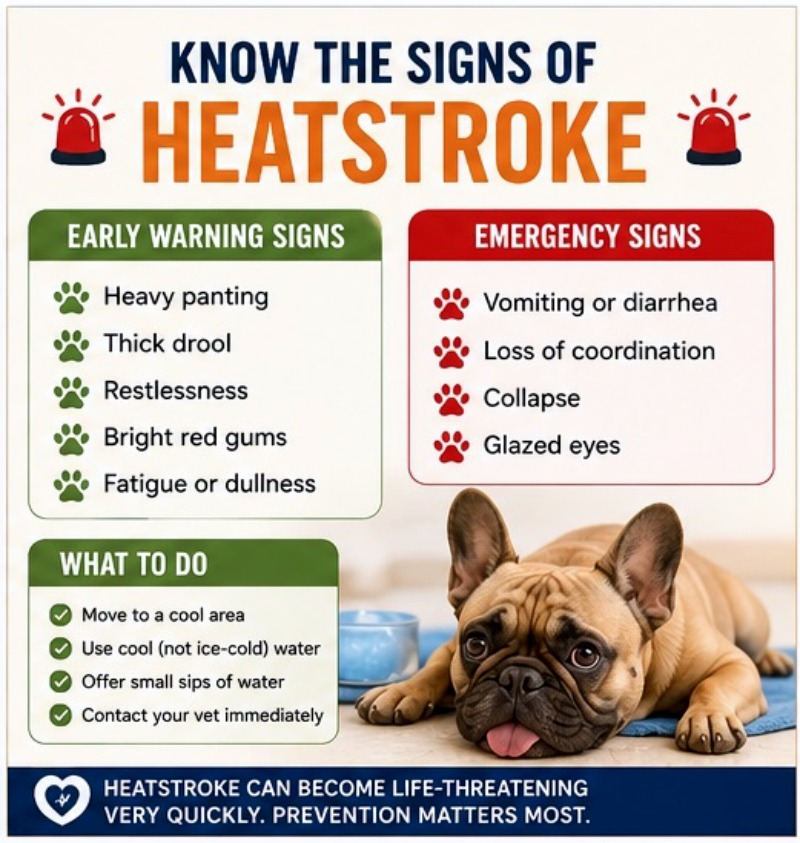
Recognizing Heatstroke Before It Becomes an Emergency 🚨
Heat exhaustion and heatstroke can escalate incredibly fast in pets — especially during DFW summers.
Early Warning Signs
• Heavy or excessive panting
• Thick drool or unusually sticky saliva
• Restlessness or pacing
• Bright red gums
• Fatigue or slower responses than normal
Emergency Warning Signs
Seek veterinary care immediately if you notice:
• Vomiting or diarrhea
• Loss of coordination or stumbling
• Collapse
• Glazed eyes or unresponsiveness
What To Do Immediately
• Move your pet to a cool or shaded area
• Use cool (not ice-cold) water on paws, belly, armpits, and groin area
• Offer small amounts of cool water if they are alert and able to drink
• Contact a veterinarian immediately while transporting your pet
Heatstroke can become life-threatening very quickly, even with treatment.
In Texas summers, prevention matters far more than trying to react once symptoms appear.
High-Risk Pets Need Extra Attention ⚠️
All pets are vulnerable to extreme heat, but some are at significantly higher risk.
Flat-Faced Breeds
French Bulldogs, Pugs, Boxers, Persian cats, and other brachycephalic breeds have compressed airways that make cooling themselves much harder.
Senior Pets
Older pets often struggle to regulate body temperature as efficiently.
Overweight Pets
Additional body mass traps heat and increases strain on the body.
Thick Double-Coated Breeds
Huskies, Malamutes, Chows, and similar breeds are especially sensitive to DFW heat.
(Yes, Husky families — we’re looking at you 👀)
Puppies and Kittens
Young pets have immature thermoregulation systems and can overheat quickly.
Pets With Medical Conditions
Heart disease, respiratory conditions, and mobility issues can dramatically increase heat risk.
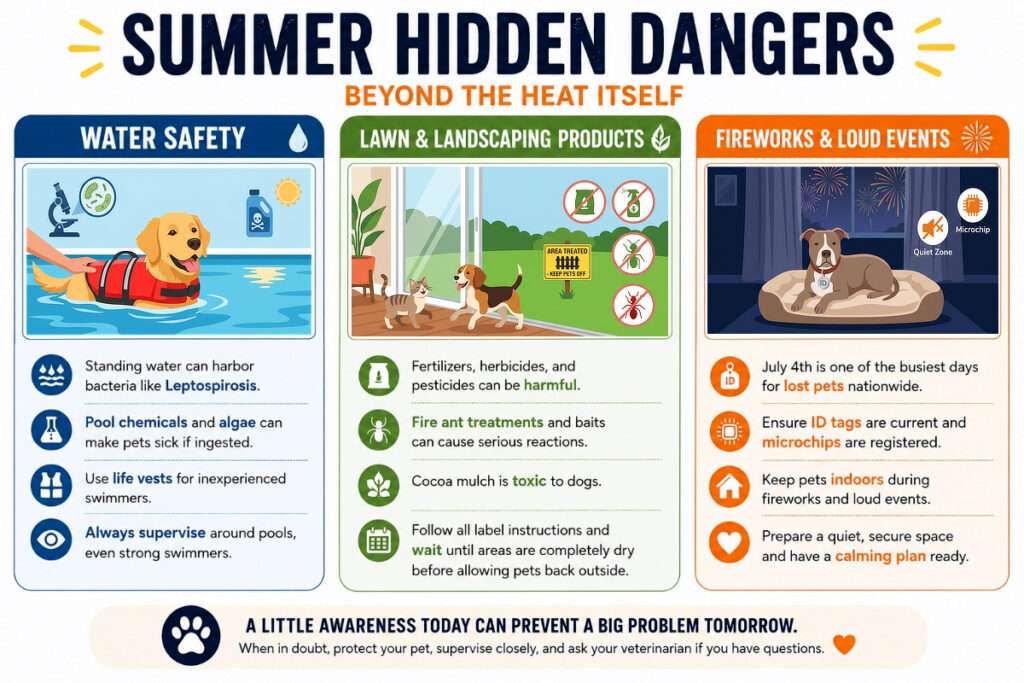
The Hidden Summer Dangers 🔍
Summer hazards go beyond the heat itself.
Water Safety
• Standing water can harbor harmful bacteria, including Leptospirosis
• Pool chemicals and algae can make pets sick if ingested
• Always supervise pets around pools, even strong swimmers
• Even Dogs who are experienced swimmers should wear life vests during water activities
Lawn & Landscaping Products
Summer lawn treatments can create hidden risks for pets.
Be cautious with:
• Fertilizers
• Herbicides
• Pesticides
• Fire ant treatments
• Cocoa mulch, which is toxic to dogs
Always follow recommended waiting periods before allowing pets back onto treated lawns.
Fireworks & Loud Events 🎆
July 4th is one of the busiest times of year for lost pets nationwide.
Even calm pets can panic unexpectedly around fireworks.
Before holiday events:
• Confirm ID tags are current
•consider adding an air tag or tile tracker to your pets collar
• Ensure microchip information is updated
• Keep pets indoors during fireworks
• Have a quiet, secure calming space prepared ahead of time
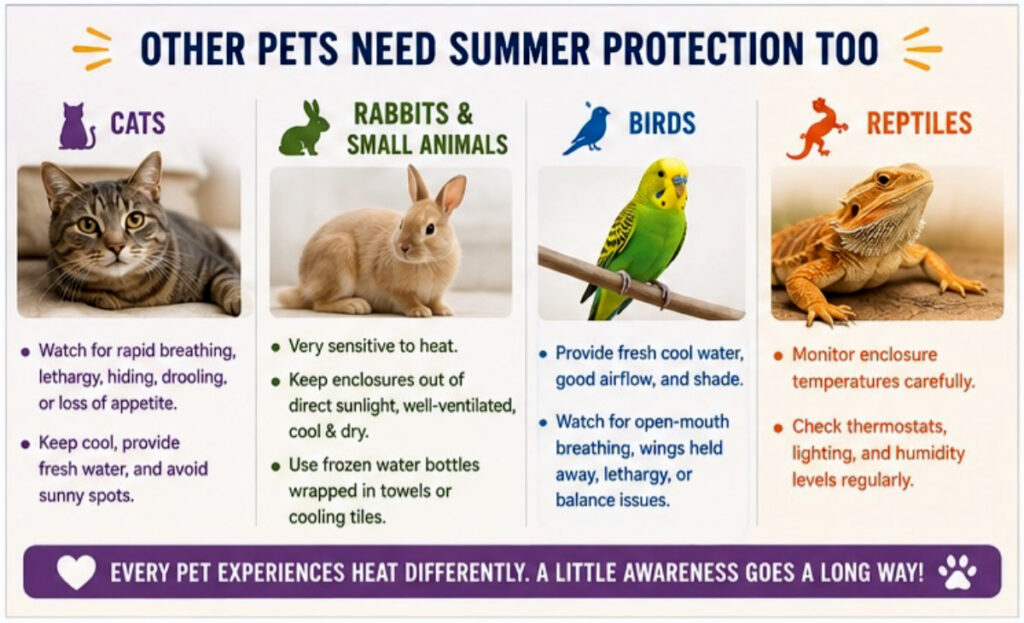
Other Pets Need Summer Protection Too 🐱🐰🦜🦎
Dogs aren’t the only pets affected by Texas heat.
Cats, small animals, birds, and reptiles can all struggle during extreme summer temperatures — sometimes in ways that are harder to notice.
Cats
Cats are often more subtle when they’re overheated.
Watch for:
• Rapid breathing or panting
• Lethargy or hiding more than usual
• Drooling
• Loss of appetite
Even indoor cats can become overheated near sunny windows, garages, enclosed patios, or rooms with poor airflow.
Rabbits & Small Animals
Rabbits, guinea pigs, hamsters, and other small pets are especially sensitive to heat.
Many small animals tolerate cold far better than high temperatures, and overheating can happen quickly in outdoor hutches or poorly ventilated rooms.
Keep enclosures:
• Out of direct sunlight
• Well-ventilated
• Cool and dry
Frozen water bottles wrapped in towels or cooling tiles can also help provide relief safely.
Birds
Birds can overheat surprisingly fast in warm or humid environments.
Make sure birds always have:
• Fresh cool water
• Good airflow
• Shade from direct sunlight
Watch for:
• Open-mouth breathing
• Wings held away from the body
• Lethargy or balance issues
Reptiles
Reptiles require heat — but excessive temperatures can still become dangerous.
Outdoor tanks, glass enclosures near windows, or malfunctioning heat lamps can quickly create unsafe conditions.
Always monitor enclosure temperatures carefully during summer months and double-check thermostats, lighting, and humidity levels.
A Quick Reminder 🐾
If the summer heat has already caught you off guard a little this year — no judgment.
Texas heat escalates fast, and honestly, most pet owners learn some of this the hard way at least once.
But small adjustments truly make a huge difference.
And if you’re already planning ahead before the worst of summer arrives?
That kind of preparation is exactly what helps prevent emergencies.
Hydration is Critical!
Pets should always have access to cool, clean water during hot weather.
Outdoor water bowls heat up quickly in direct sun, so refresh them often and keep them shaded whenever possible.
Many pets also drink more consistently from circulating pet fountains, which can help during the hottest months.
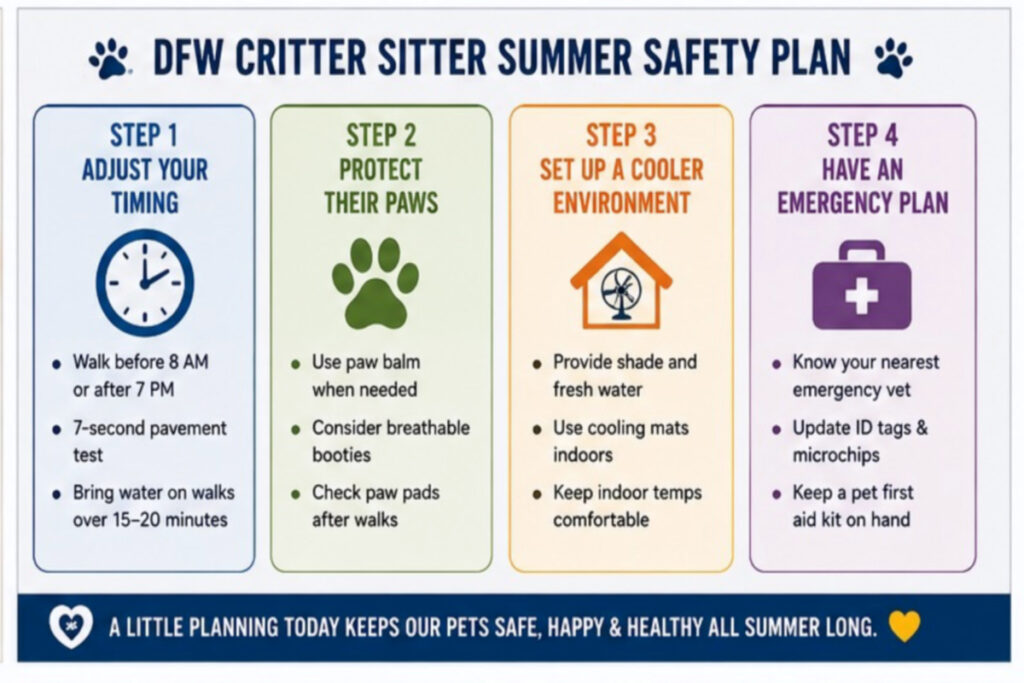
The DFW Critter Sitter Summer Safety Plan ☀️
Step 1: Adjust Your Timing
• Walk before 8 AM or after 7 PM
• Perform the 7-second pavement test before walks
• Bring water on walks longer than 15–20 minutes
Step 2: Protect Their Paws
• Use paw balm when needed
• Consider breathable booties for hot surfaces
• Check paw pads after walks for redness, blistering, or sensitivity
Step 3: Set Up a Cooler Environment
• Ensure pets always have access to shade and fresh water
• Use portable and plug in fans at your pets level at home, in car & even out door, makes a huge difference
• Cooling mats can help pets self-regulate indoors
• Keep indoor temperatures comfortable and consistent
Step 4: Have an Emergency Plan
• Know your nearest emergency veterinarian before you need one
• Keep ID tags and microchips updated
• Maintain a simple pet first aid kit at home and in the car
Final Word From DFW Critter Sitter 🐾
Texas summers don’t mean pets can’t enjoy life outdoors.
It just means we have to adjust how we care for them.
A little planning goes a long way:
• Walk earlier
• Watch the pavement
• Prioritize hydration
• Learn the warning signs
• Have a plan before an emergency happens
And if you’re ever unsure whether the heat is becoming too much for your pet, trust your instincts and play it safe.
That’s exactly what we do every day here at DFW Critter Sitter.
Because keeping pets safe, comfortable, and cared for is never “extra.”
It’s simply part of loving them well.
— DFW Critter Sitter
Reliable care. Thoughtful support. Happy pets.
DFW Critter Sitter Summer Pet Safety Favorites ☀️🐾
Some of these are products we genuinely recommend for helping pets stay safer and more comfortable during brutal Texas summers.
(As an Amazon Associate, DFW Critter Sitter may earn from qualifying purchases.)
Cooling Mats ❄️
Great for:
• Senior pets
• Thick-coated breeds
• Flat-faced breeds
• Pets who overheat easily
Cooling Mat for Extra Large Dogs – Recommended Pick
Why we like it:
• Self-cooling design
• No electricity required
• Easy to wipe clean
Cooling mats can help pets regulate body temperature indoors after walks or outdoor time.
Portable Pet Water Bottles 💧
Perfect for:
• Walks
• Travel
• Hikes
• Summer outings
Recommended Picks:
Dog Water Bottle
Canteen Travel Kit
Why we like it:
• Leak-proof design
• Attached drinking tray
• One-handed use
Dog Booties for Hot Pavement 🐾
Hot pavement burns happen faster than most people realize.
Summer Dog Booties: Recommended Pick
Helpful for:
• Midday potty breaks
• Senior dogs
• Sensitive paws
• Summer walks on pavement
Stainless Steel Pet Water Fountains ⛲
Many pets — especially cats — drink more water from moving fountains.
Stainless Steel Water Fountain: Recommended Pick
Great for:
• Cats
• Multi-pet households
• Pets prone to dehydration
Cooling Vests & Cooling Bandannas 🧊
Dog Cooling Bandanna: Recommended Pick
Helpful during:
• Outdoor walks
• Hiking
• Patio time
• Sporting events
Cooling accessories can help reduce overheating during outdoor activity when used alongside proper hydration and shade.
Elevated Cooling Dog Beds 🛏️
Raised mesh beds improve airflow and help pets stay cooler outdoors.
Elevated Dog Bed: Recommended Pick
Especially helpful for:
• Large breeds
• Thick-coated dogs
• Backyard lounging
Pet First Aid Kits 🚑
Summer emergencies happen fast.
Pet First Aid Kit: Recommended Pick
Good kits should include:
• Gauze
• Vet wrap
• Tweezers
• Saline wash
• Emergency info card
Dog Life Jackets 🌊
Not every dog is a natural swimmer — even if they love water.
Dog Life Jacket: Recommended Pick
Strongly recommended for:
• Lakes
• Boats
• Pools
• Paddle boarding
Pet-Safe Sunscreen & Moisturizer ☀️
Yes — pets can absolutely get sunburned.
Sun Protection Spray: Recommended Pick
Dog Paw Balm: Recommended Pick
Especially important for:
• Light-colored pets
• Thin-coated breeds
• Hairless cats
• Dogs with pink noses or exposed skin
The Big Picture 🐾
No product replaces supervision, hydration, shade, and common sense during a Texas summer. But the right tools can absolutely help make hot weather safer and more comfortable for you.
📚 Sources & References
• American Veterinary Medical Association (AVMA) — Summer safety guidelines, heatstroke signs, and brachycephalic breed risks
• NOAA / National Weather Service Fort Worth — DFW climate averages and heat data
• Cornell University College of Veterinary Medicine — Hot car safety and heatstroke information
• Climate Central — Pavement and surface temperature research
• ASPCA — Hot weather pet safety recommendations
• Companion Animal Parasite Council — Seasonal environmental and parasite risks
• Kansas State University Veterinary Medicine — Water safety and paw protection guidance